Millions across the United States watch the Superbowl for not only the football game, but to rate the commercials. From this years Superbowl, which aired on February 6 2011, you wouldn't have even guessed that the car industry had previously declined. There were commercials for many various car manufacturers: from GM to BMW. My question to you is, how effective do you think these Superbowl commercials really are for car manufacturers?
There is a very large competition between brands during the Superbowl each year, but I have come to realize that car manufacturers have the biggest! Having only 30 seconds of fame, I can imagine how hard it is to get your selling point across. One of the commercials that stood out the most to me, and I can imagine it did to others, was the Volkswagen commercial with Darth Vader. It can be seen below. I wasn't aware this was even a car commercial until halfway into it. The music made you tune in until you knew exactly what it was for. What car commercial do you think stood out the most?
-------------------------------------------------------------------------------------------
I agree, the VW commercial was my favorite. I also wasn't aware it was a car commercial until the very end. I recently remember seeing an article about the different types of commercials in this superbowl. Usually beer companies dominate the commercial spots, however, this year car commercials made up around 50% of the total commercials. I think that car companies are beginning to see the financial recovery and the Super Bowl commercials are evidence of the car manufacturer's new confidence.
I also noticed, although I can't claim to have watch every commerical, that there was an increase of European imports and domestic cars and less, Japanese imports like Honda and Toyota. Could this be due to, specifically Toyota's, bad press over the past year?
Wednesday, February 9, 2011

Monday, February 7, 2011
Week 4: AOL Huffington Post Merger
My inspiration for this weeks post is this WSJ article:
http://online.wsj.com/article/SB10001424052748704858404576129234044123852.html?mod=WSJ_newsreel_technology
About the AOL, Huffington Post Merger.
The article states that AOL and the Huffington Post have merged, with the Huffington Post making $315m on the deal. The article also mentions that AOL is looking to expand its news, entertainment and digital content.
AOL was once the internet equivelant for me. When I thought internet, I thought AOL. Before facebook, this was how people were using the internet to communicate and stay up to date. However, for reasons that I do not know, I feel that AOL lost a lot of its momentum coming in to the digital age. It now represents images of “acient” technology and the terrible dial-up noise.
This change of perspective and business practice that AOL has gained from the merger I think is a step in the right direction. By changing their service to be more digitial information, they are able to once again use their name to help market themselves as internet leaders. The Huffington Post has been doing a great job as an internet-only newspaper, one of the first of its kind. With AOL’s size, and the Post’s innovation and business model the merger could be great for both companies. It is important that the services that customers are receiving does not change drastically. For instance, if customers are requred to pay for the new services, it could do damage to the Post’s reputation.
I think it will be interesting to see, in the coming months, how AOL and the Huffington Post collaborate and move forward with their merger. I think both companies can benefit , and complement each other if they can agree on a particular business model that is customer orientated. With the influx of information readily available on the internet, and websites like twitter that allow users to share imformation freely and quickly, AOL and the Post have interesting road blocks in their growth. But the potential is there.
What do you think? Is this merger good for the companies? Do you think anything will change? Do you think that this could lead to great innovations?
http://online.wsj.com/article/SB10001424052748704858404576129234044123852.html?mod=WSJ_newsreel_technology
About the AOL, Huffington Post Merger.
The article states that AOL and the Huffington Post have merged, with the Huffington Post making $315m on the deal. The article also mentions that AOL is looking to expand its news, entertainment and digital content.
AOL was once the internet equivelant for me. When I thought internet, I thought AOL. Before facebook, this was how people were using the internet to communicate and stay up to date. However, for reasons that I do not know, I feel that AOL lost a lot of its momentum coming in to the digital age. It now represents images of “acient” technology and the terrible dial-up noise.
This change of perspective and business practice that AOL has gained from the merger I think is a step in the right direction. By changing their service to be more digitial information, they are able to once again use their name to help market themselves as internet leaders. The Huffington Post has been doing a great job as an internet-only newspaper, one of the first of its kind. With AOL’s size, and the Post’s innovation and business model the merger could be great for both companies. It is important that the services that customers are receiving does not change drastically. For instance, if customers are requred to pay for the new services, it could do damage to the Post’s reputation.
I think it will be interesting to see, in the coming months, how AOL and the Huffington Post collaborate and move forward with their merger. I think both companies can benefit , and complement each other if they can agree on a particular business model that is customer orientated. With the influx of information readily available on the internet, and websites like twitter that allow users to share imformation freely and quickly, AOL and the Post have interesting road blocks in their growth. But the potential is there.
What do you think? Is this merger good for the companies? Do you think anything will change? Do you think that this could lead to great innovations?
Wednesday, February 2, 2011
In Response to Diana Schaller (Week 3)
I guess my big question is what would you do if you were being pressured to remove your commercial from the air during a show? Is it worthwhile to submit to the pressure of parental groups? Why is it so necessary to respond to them and do they really have enough power to hurt your business?
-----------------
It is interesting that you mention Skins. Originally it was a teen drama in the U.K. The content in the British version has more sex, drugs, etc. However, the British advertisers and audiences did not have the reaction to the show that American advertisers and audiences have had. The British version of Skins was on TV for at least 4 seasons, if not more.
As an advertiser, submitting to pressures from parental groups is only in the best interest of the company. although the Tiger Woods example is different in many ways, it is similar to how the companies endorsing Tiger Woods reacted. As soon as Tiger made a mistake his sponsors immediately tried to "save face."
Businesses, especially ones who market to children and teens (like Skins sponsors,) want their product or service to be associated with a positive image. So when parents are angered, it is the parents that have the money. I guess I can understand the quick reaction by sponsors, however I have always been partial to the idea that, "Any Press is Good Press." Skins has recieved more notice from being provocative than it would have as a sub-par MTV drama.
-----------------
It is interesting that you mention Skins. Originally it was a teen drama in the U.K. The content in the British version has more sex, drugs, etc. However, the British advertisers and audiences did not have the reaction to the show that American advertisers and audiences have had. The British version of Skins was on TV for at least 4 seasons, if not more.
As an advertiser, submitting to pressures from parental groups is only in the best interest of the company. although the Tiger Woods example is different in many ways, it is similar to how the companies endorsing Tiger Woods reacted. As soon as Tiger made a mistake his sponsors immediately tried to "save face."
Businesses, especially ones who market to children and teens (like Skins sponsors,) want their product or service to be associated with a positive image. So when parents are angered, it is the parents that have the money. I guess I can understand the quick reaction by sponsors, however I have always been partial to the idea that, "Any Press is Good Press." Skins has recieved more notice from being provocative than it would have as a sub-par MTV drama.
Monday, January 31, 2011
Week 3: Publishing Books as Self-Promotion
I think, historically, that having a piece of writing (whether a book or a journal) published immediately adds credit to the author. The idea is that the publishing companies take great care in reviewing each book before it is published. This makes books seem credible by nature.
Whether this is true is up to interpretation, however I think that being published is a smart way to promote yourself as an expert on a particular subject. The WSJ article mentions a dentist who says, "If you write a book, you are an expert...Who would you rather go to? Someone who has written a book, or someone who hasn't?" I think this question is an important one. The credibility gained after being published is definitely a defining characteristics when looking for an expert. If it was a choice between two identical candidates, where one person was a published author and the other was not, I believe the author would be the most popular choice.
I think the use of digital publishing is also a great way to add a second form of income from the expertise that a person has gained. The article calls this “invisible income.” I really like the idea of an entrepreneur utilizing as many options as possible to create the most profit. By releasing a book, with little overhead cost like digital books, the author is able earn the most profits. I support this earning strategy. Does anyone think that writing books to gain credibility is wrong?
Whether this is true is up to interpretation, however I think that being published is a smart way to promote yourself as an expert on a particular subject. The WSJ article mentions a dentist who says, "If you write a book, you are an expert...Who would you rather go to? Someone who has written a book, or someone who hasn't?" I think this question is an important one. The credibility gained after being published is definitely a defining characteristics when looking for an expert. If it was a choice between two identical candidates, where one person was a published author and the other was not, I believe the author would be the most popular choice.
I think the use of digital publishing is also a great way to add a second form of income from the expertise that a person has gained. The article calls this “invisible income.” I really like the idea of an entrepreneur utilizing as many options as possible to create the most profit. By releasing a book, with little overhead cost like digital books, the author is able earn the most profits. I support this earning strategy. Does anyone think that writing books to gain credibility is wrong?
Saturday, January 29, 2011
Response to Dan's Week 2 Type A blog
Price- Price is a very complicated variable because it is one that is not completely in your control. One way that you can have some control over what you get paid is being willing to work for a lower price than your competition. This is a strategy used to get the job over others and it is done with the thought that over time you will see a pay increase. Another strategy that there is a fine line with, is trying to go for the biggest salary you can get. This if successful comes with a huge reward but if not you can over price yourself and end up not getting the job.
----------------
In response to your post about the marketing mix in the job market, I have decided to focus just on the price variable. Although the employee has the option to work for a lower price, there is a fine line between selling yourself short and being too greedy. I think that as a college student working for less money, especially in this economy, is the better idea. this way you increase your chances of beating out the competition for the job and give yourself the opportunity to prove yourself in the job and earn higher wages as time goes on. However, there are many people looking for jobs, most of whom, will have more years of experience than I will have exiting college. So even working for less money might not be the deciding factor in the job hunt.
----------------
In response to your post about the marketing mix in the job market, I have decided to focus just on the price variable. Although the employee has the option to work for a lower price, there is a fine line between selling yourself short and being too greedy. I think that as a college student working for less money, especially in this economy, is the better idea. this way you increase your chances of beating out the competition for the job and give yourself the opportunity to prove yourself in the job and earn higher wages as time goes on. However, there are many people looking for jobs, most of whom, will have more years of experience than I will have exiting college. So even working for less money might not be the deciding factor in the job hunt.
Wednesday, January 26, 2011
Week 2: Marketing Mix in Job Hunt

When job searching, using the “marketing mix” as a guide to how to market yourself is an effective technique. I think it forces me to think about the details and formulate a “plan of attack” in order to have the best impact as an applicant.
First I think if you think of yourself as a product that you are trying to sell to employers you can break down your positive, and potentially negative attributes, and work on ways to emphasize your positives. What is the quality of your work? What are other “features” about you that makes you different? What is your work style or ethic? How much do you cost? These are all important questions to think about before applying for a job because they give me a removed insight into my own thoughts of my application.
Place is also important. Where do I live? Where is the work? How large of an area, or commute am I willing to agree on? What are my transportation details? These questions not only help the employer understand certain logistics of my application but they help me understand external commitments and factors that could influence my decisions as a job seeker.
Promotion is the main idea behind “winning” a job in this market. By promoting myself I increase the chances of finding a match. However it is important to think about the cost of promotion and the scope of the promotions. I will need to research the market or business sector that I am interested in joining and then focus my promotional efforts on specific areas and details to maximize my efficiency. I don't want to be promoting my skills in film production in a place that doesn't have a market for my services.
Finally price is a major consideration. I can use my price as enticement if I am willing to be priced lower. I can also add some value and create more profits if I promote myself with a slightly higher price. When discussing personal price I think it is important to not undersell yourself but also understand competition. If starting work at a lower price gets me the job the opportunity to grow as an employee, it may be more beneficial than a slightly higher paying, dead end job. How do you think these elements influence a job applicant?
Tuesday, January 25, 2011
Week 1 Response to Matt Panicali
Matt's Response:
I would have to say the main difference between marketing, advertising and propoganda is the purpose of each of the terms. In all three instances, the goal is to convince the audience of something. The difference, however, is what exactly your are trying to convince the audience of.
I think the goal of marketing is an attempt to sell something to your audience. Whether it be a product, a service, or something else, the goal of marketing is to convince the audience that your product or service is better than anyone else in your specific market. For example, if you were trying to sell a car you would "market" the car on t.v., magazines, etc.and tell the audience all the positive aspects of the car and why it is the best choice for anyone currently in the market for a new car.
The term advertising on the other hand is similar to marketing, however it is not necessarily an attempt to profit financially from selling a good or service. Advertising can simply be means of making an audience more aware of something that they may not have been aware of before they saw your advertisement. For example, the "Above the Influence" advertisements that encourage kids to say "no" to drugs are not an attempt to sell anything to its audience but rather to convince them of the dangers of drugs.
Finally, while advertising and marketing attempt to convince an audience that what they have to say is right, the goal of propaganda is to convince the audience that what the opponent or enemy has to say is wrong. Propaganda, is often false and an attempt to bring a negative image of an enemy or opponent to the audience. For example, the Nazi regime used propaganda to convince the public that the Jewish community was the enemy and needed to be destroyed.
While the goals of all three terms is to convince an audience of something, the difference comes in what the audience is being convinced of.
-----------------
I agree with your view on Propaganda. Often it is false and the information is presented in a way that plays on fears and is aimed to confuse and scare a group of people into a particular way of thinking. However, I think it is helpful to not always think of propaganda as a "good vs. evil" scenario. Often I feel propaganda is a slow moving form of marketing that is reliant on creating a subconscious anchor. Propaganda has a negative connotation but it can be used in positive ways. unfortunately this is not always the case. I think propaganda is most effective on the weaker minded, more easily influenced crowd. this could explain why many of the implementations of propaganda have been by "bad guys" in order to control their subordinates.
I also understand your point of the difference between the three terms being the end product, service, and/or idea that the consumer is being marketed towards. I also think that the degree of specificity of what product, service or idea plays into which of these terms is being used.
I would have to say the main difference between marketing, advertising and propoganda is the purpose of each of the terms. In all three instances, the goal is to convince the audience of something. The difference, however, is what exactly your are trying to convince the audience of.
I think the goal of marketing is an attempt to sell something to your audience. Whether it be a product, a service, or something else, the goal of marketing is to convince the audience that your product or service is better than anyone else in your specific market. For example, if you were trying to sell a car you would "market" the car on t.v., magazines, etc.and tell the audience all the positive aspects of the car and why it is the best choice for anyone currently in the market for a new car.
The term advertising on the other hand is similar to marketing, however it is not necessarily an attempt to profit financially from selling a good or service. Advertising can simply be means of making an audience more aware of something that they may not have been aware of before they saw your advertisement. For example, the "Above the Influence" advertisements that encourage kids to say "no" to drugs are not an attempt to sell anything to its audience but rather to convince them of the dangers of drugs.
Finally, while advertising and marketing attempt to convince an audience that what they have to say is right, the goal of propaganda is to convince the audience that what the opponent or enemy has to say is wrong. Propaganda, is often false and an attempt to bring a negative image of an enemy or opponent to the audience. For example, the Nazi regime used propaganda to convince the public that the Jewish community was the enemy and needed to be destroyed.
While the goals of all three terms is to convince an audience of something, the difference comes in what the audience is being convinced of.
-----------------
I agree with your view on Propaganda. Often it is false and the information is presented in a way that plays on fears and is aimed to confuse and scare a group of people into a particular way of thinking. However, I think it is helpful to not always think of propaganda as a "good vs. evil" scenario. Often I feel propaganda is a slow moving form of marketing that is reliant on creating a subconscious anchor. Propaganda has a negative connotation but it can be used in positive ways. unfortunately this is not always the case. I think propaganda is most effective on the weaker minded, more easily influenced crowd. this could explain why many of the implementations of propaganda have been by "bad guys" in order to control their subordinates.
I also understand your point of the difference between the three terms being the end product, service, and/or idea that the consumer is being marketed towards. I also think that the degree of specificity of what product, service or idea plays into which of these terms is being used.
Friday, January 21, 2011
Marketing, Advertising, Propaganda. Week 1
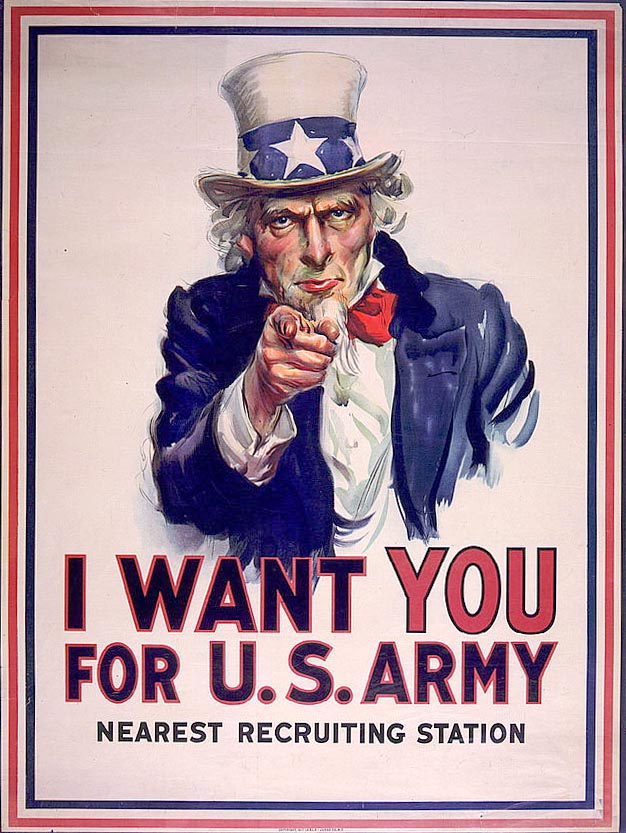
What is the difference between marketing, advertising and propaganda? All three of these terms can be used to describe a method of persuasion. However, the terms are very different. For one marketing is a more general term. Our book talks about how marketing is the process of creating, distributing, promoting, and pricing of goods or services. Marketing is more applicable to the release of brand new goods or services, rather than a storied product because it is a complete process. A product like the iPod, when it first came out, was put through the entire marketing process. Consumers were unfamiliar with a product like the iPod so Apple had to take additional steps to market their new product and create a familiarity and loyalty that has surpassed any consumer electronic device to date.
Advertising is a more specific form of marketing. Where marketing involves the creation and distribution of a product, advertising is primarily promotional. Advertising is a more specific marketing strategy that is used once a product or brand has already been accepted by the consumer market. A company like McDonald’s is more focused on its advertising than its more general marketing strategy because consumers are familiar with the products that McDonald’s distributes. The advertising strategy for McDonald’s is more to repackage or revamp old products while also keeping the company in the mind of the consumer.
Finally, propaganda is more of the promotion of an idea. Propaganda sometimes receives a negative connotation because of its historical usage by the Nazi party in WWII. However, propaganda happens every day all around us. For example, the US government uses propaganda to try to win favor for certain political agendas. One of the largest examples of US propaganda would have to be the Uncle Sam “I Want You” campaign. Propaganda is more similar to marketing, in that it includes the creation and distribution of a “brand.” However, the firm behind the propaganda is using branded images and messages to promote their own, often political, agenda. Although these terms are similar in their definitions each one stands on its own as a specific strategy to persuade a consumer market into buying or believing what the business or political party want them to.What is your take on Propaganda and its use? can it be used for good?
Subscribe to:
Comments (Atom)